
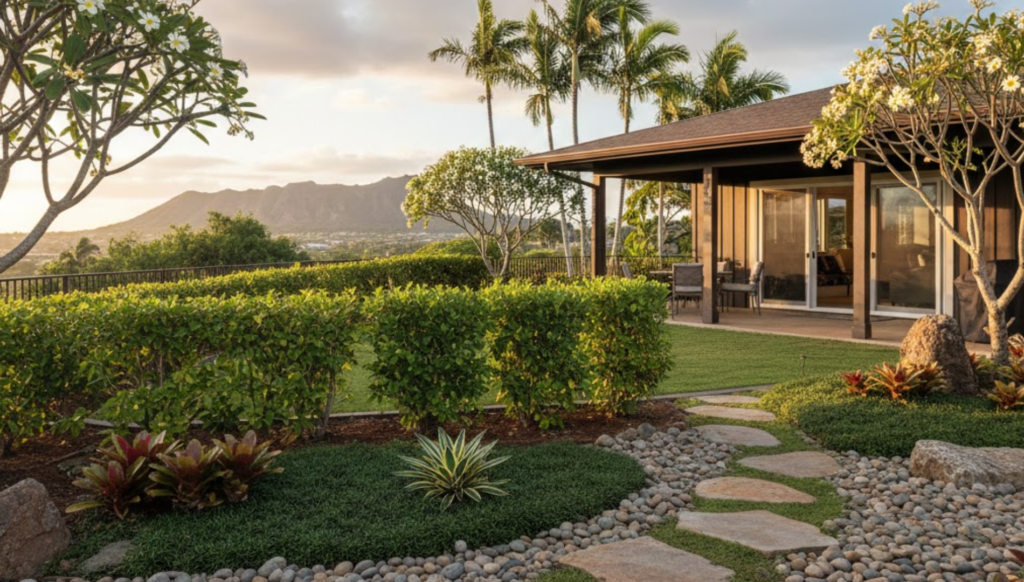
Standing in front of a nursery or scrolling through plant photos online, it is easy to feel overwhelmed. Everything looks beautiful, and suddenly you are wondering how all those plants are supposed to fit together in your yard. We hear this a lot from homeowners in Honolulu: “I love plants, but I do not know which ones actually work for my space.” That uncertainty is completely normal. Choosing the right plants is not just about looks. It is about climate, maintenance, growth habits, and how everything works together over time.
At Oceanic Landscaping, we help homeowners move past guesswork and toward thoughtful, lasting designs. The right plant choices can turn a yard into a calm retreat instead of a constant chore. If you are researching landscape designers Honolulu HI, understanding how professionals approach plant selection will help you make confident decisions and avoid common mistakes that lead to disappointment later.
A healthy, beautiful landscape starts with a clear plan. Before you fall in love with a single plant, it helps to step back and consider how your yard functions day to day. Where do you walk? Where do you sit? Which areas stay damp after rain? Which corners get intense afternoon sun? These details matter more than plant photos because the best plants for your yard are the ones that thrive in your conditions, not just the ones that look great on a screen. This is one reason homeowners lean on landscape designers Honolulu HI who understand local conditions and design for long-term success.
How Do You Choose The Right Plants For Landscape Design?
Choosing the right plants for your landscape design starts with understanding your environment and your goals. Consider climate, sunlight, soil conditions, available space, and how much maintenance you are willing to do. Plants should be selected not only for their appearance, but also for how they grow over time, how much water they need, and how they interact with nearby plants.
A successful landscape uses plants that thrive naturally in the local climate, fit the scale of the space, and support the intended use of the yard. When plants are chosen intentionally, landscapes stay healthier, look better year-round, and require far less upkeep. That is the approach trusted landscape designers Honolulu HI use when building landscapes that feel good to live with.
What Plants Are Good For Landscaping?
Good landscaping plants balance beauty, durability, and compatibility with the environment. In practical terms, that means selecting plants that handle local conditions well, resist common pests, and fit the space as they mature. Shrubs that provide structure, groundcovers that reduce weeds, and trees that offer shade without overpowering the yard are common building blocks in residential landscape design.
The best plant choices also serve a purpose. Some plants create privacy. Others direct foot traffic, soften hard edges, or stabilize slopes. Many homeowners unintentionally select plants like decorations, one at a time, without thinking about how they work together. A stronger approach is to choose plants as a system. That system should include structure, layering, and repetition so the yard feels cohesive. This is exactly how landscape designers Honolulu HI approach landscape plant selection in a way that holds up through seasons and weather changes.
When you are choosing plants, it helps to ask a few simple questions. Will this plant grow wide or tall? Does it need constant pruning? Does it drop fruit or leaves near walkways? Does it tolerate wind and salt? By focusing on performance and placement, you can build a yard that feels intentional instead of unpredictable.
How To Select Landscape Plants?
Selecting landscape plants begins with evaluating your yard’s conditions. Observe how much sunlight different areas receive throughout the day, how water drains after rainfall, and how much room each planting zone actually has. Take note of areas that stay wet, areas that get blasted by afternoon sun, and areas that are exposed to wind.
Maintenance should also be part of the decision. Some plants require frequent pruning, watering, and cleanup, while others are more self-sufficient once established. Honest planning helps prevent frustration later. It is also important to consider how plants look together, not individually. A yard with too many unrelated plant styles can feel cluttered, even if each plant is beautiful on its own.
According to the American Society of Landscape Architects, thoughtful plant selection improves sustainability, reduces maintenance, and enhances long-term landscape performance. This is why homeowners often consult landscape designers Honolulu HI to develop a clear plant palette that fits the site and keeps the yard looking consistent year-round.
A practical method is to start with your “backbone” plants first. These are the structural shrubs, small trees, and groundcovers that create shape even when nothing is in bloom. Then add accent plants that provide seasonal color and texture. This approach keeps the yard stable and reduces the temptation to fill every gap with something random.
What Plants Should I Get For My Garden?
The best plants for your garden depend on how you plan to use the space. If relaxation is the goal, choose plants with soft textures, calming greens, and a layout that feels simple and uncluttered. If you entertain often, low-litter plants and clean edges help keep the area comfortable and easy to maintain. If visual impact is your priority, layered heights and varied leaf shapes can create depth even in smaller spaces.
It is also helpful to think about how close plants will be to daily activity. Spiky plants near walkways can be irritating. Strong-scent plants near seating can be pleasant for some people and overwhelming for others. Large-leaf tropical landscape plants can be dramatic, but they may also need space to avoid blocking airflow or crowding other plantings.
Oceanic Landscaping guides homeowners toward plants that match their lifestyle, not just their taste. That is one reason people seek landscape designers Honolulu HI when they want a garden that feels enjoyable instead of demanding. Find helpful advice in Top Walkway Designs That Blend Function and Style in Your Landscaping.
Native Vs. Non-Native Plants
Native plants are often easier to maintain because they are adapted to local conditions. They typically require less intervention once established and may handle local pests and weather patterns more smoothly. For Honolulu homeowners, native options can also support a landscape that feels naturally connected to the island.
Non-native plants can still work beautifully, especially in tropical designs, but they often require more attention. Some may need more consistent watering, more pruning, or more protection from wind and salt exposure. The key is balance. A thoughtful mix can bring variety and color without creating a yard that feels difficult to maintain.
Professional planning helps strike that balance by matching each plant to the correct placement and pairing plants with similar needs. This is a common reason homeowners work with landscape designers Honolulu HI who can build a plant plan that feels cohesive and performs well.
Planning For Growth And Maturity
One of the most common mistakes homeowners make is choosing plants based on how they look at purchase time. Plants grow, sometimes dramatically. A shrub that looks neat and compact in a pot can become wide enough to block a pathway. A small tree can become a major shade source that changes what will grow underneath it.
Planning for mature size prevents overcrowding, root damage, and constant pruning. Proper spacing supports plant health and helps each plant maintain its natural shape over time. When spacing is ignored, plants compete for light and airflow, which can lead to stress and disease.
Growth planning is a core part of residential landscape design. It is also one of the biggest advantages of working with landscape designers Honolulu HI, because designers build the layout for the yard you will have in the future, not just the yard you have today.
Color, Texture, And Year-Round Interest
A well-designed landscape uses a combination of color, texture, and foliage types. Mixing leaf shapes and plant heights adds depth, while staggered bloom times keep the yard interesting throughout the year. In Honolulu, it is also helpful to rely on foliage texture and form, not just flowers, since flowers can come and go while foliage defines the landscape daily.
Year-round interest often comes from layering. Use a few structural plants that hold shape, then add medium-height plants that create fullness, and finish with groundcovers that soften edges and reduce bare soil. Texture can be created with broad leaves, fine grasses, glossy foliage, or matte greens, depending on the style you want.
Strategic placement matters. Place statement plants where they can be appreciated, like near an entry path or a seating area, and keep busier textures away from tight corners where they can feel chaotic. Skilled landscape designers Honolulu HI use a consistent plant palette and repetition to keep the design calm and unified.
When To Work With A Professional Designer
Choosing plants may seem simple, but mistakes can be frustrating and time consuming. Plants placed in the wrong sun exposure, crowded too tightly, or paired with incompatible neighbors often struggle. Even when plants survive, the yard may not feel cohesive if the plant selection lacks structure.
Working with experienced professionals ensures plants are placed correctly, supported properly, and suited to the site. Professional designers look at sunlight, drainage, wind exposure, and how people move through the space. They also consider long-term growth, maintenance preferences, and how the landscape should feel at different times of day. At Oceanic Landscaping, our team helps homeowners avoid replanting and redesigning by building a plan that works from the start. This is why homeowners seek landscape designers Honolulu HI when they want confidence that their plant choices will thrive and the final result will feel intentional.
Final Thought
Choosing the right plants is the foundation of successful landscape design. When plants are selected with intention, based on environment, growth habits, and lifestyle, the landscape becomes easier to maintain and more enjoyable to live with. Thoughtful planning today prevents frustration tomorrow, and the right guidance makes a meaningful difference. If you are exploring landscape designers Honolulu HI, focus on professionals who prioritize site conditions, long-term growth, and cohesive design. Plant selection is not just about picking favorites. It is about building a living system that supports your home and fits the way you want to use your outdoor space.
If you are ready to create a landscape that thrives long-term, reach out to Oceanic Landscaping. Our experienced landscape designers Honolulu HI homeowners trust are here to help you choose the right plants for your space, style, and environment. Contact us today to schedule a consultation and receive expert guidance tailored to your goals.